
Interior doors are everywhere, yet they are often treated as an afterthought. A standard opening gets a standard door, and one of the largest visual surfaces in the room is expected to disappear.
But why settle for a boring entryway?
A thoughtfully designed door can reinforce the architecture, establish the mood of a room, support wayfinding, and turn an everyday transition into a memorable design moment. From expressive applied moulding to crisp routed lines and integrated privacy glass, the door can become part of the design language rather than merely a functional necessity.
These eight unique interior door designs show how distinctive profiles can work across hospitality, residential, commercial, multifamily, and healthcare environments.
1. Let the Line Lead the Eye
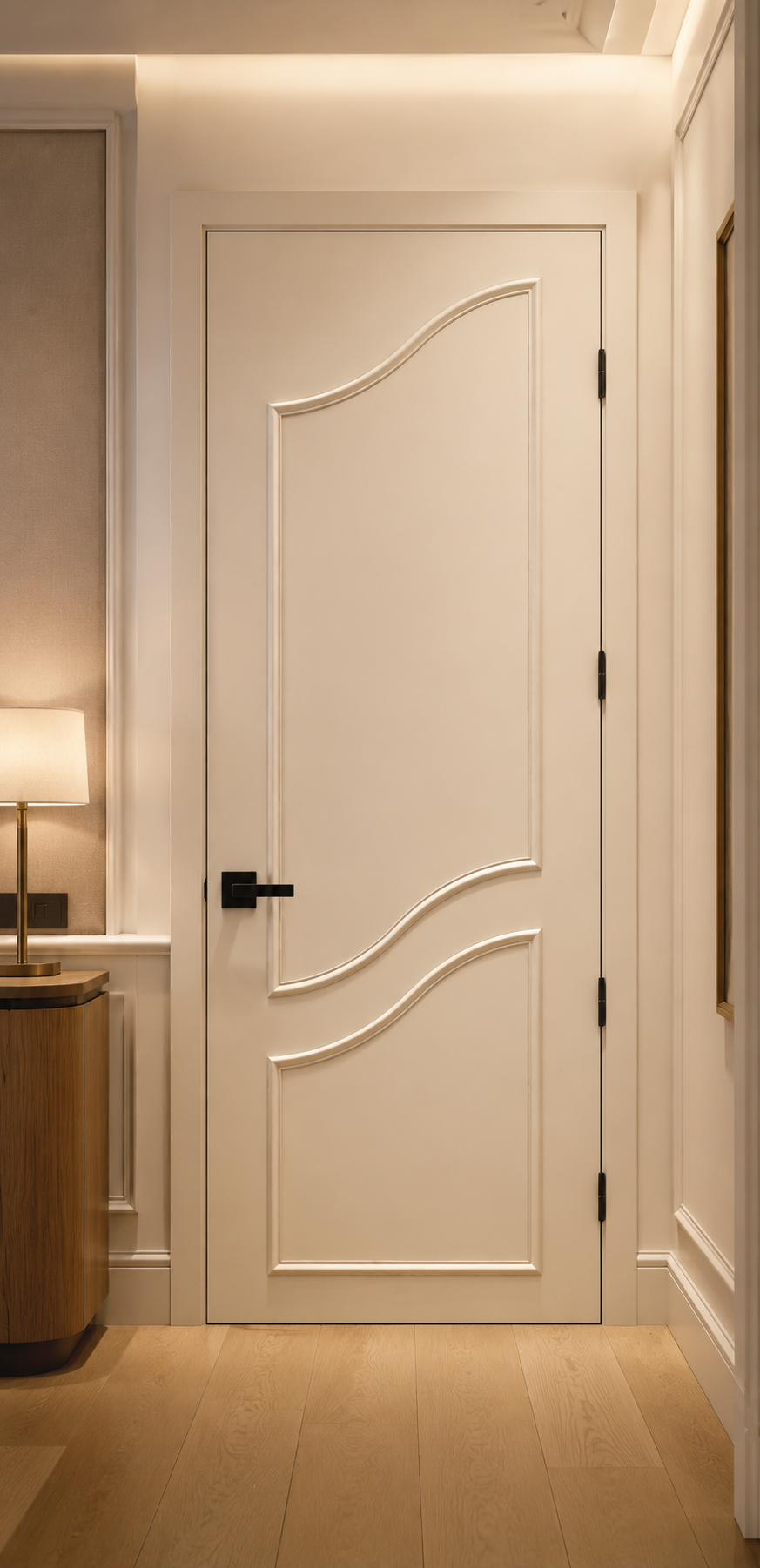
The sweeping moulding of the SC_2100 creates movement without relying on excessive ornament. Its curved upper and lower profiles guide the eye across the door and give a guest-room entrance a sense of arrival.
In a boutique hotel, this kind of design helps individual rooms feel more considered and memorable. A soft neutral finish keeps the effect sophisticated, while contrasting hardware adds a clean contemporary edge. The result is expressive enough to establish character without overwhelming the corridor or suite.
2. Turn Glass Into an Architectural Feature
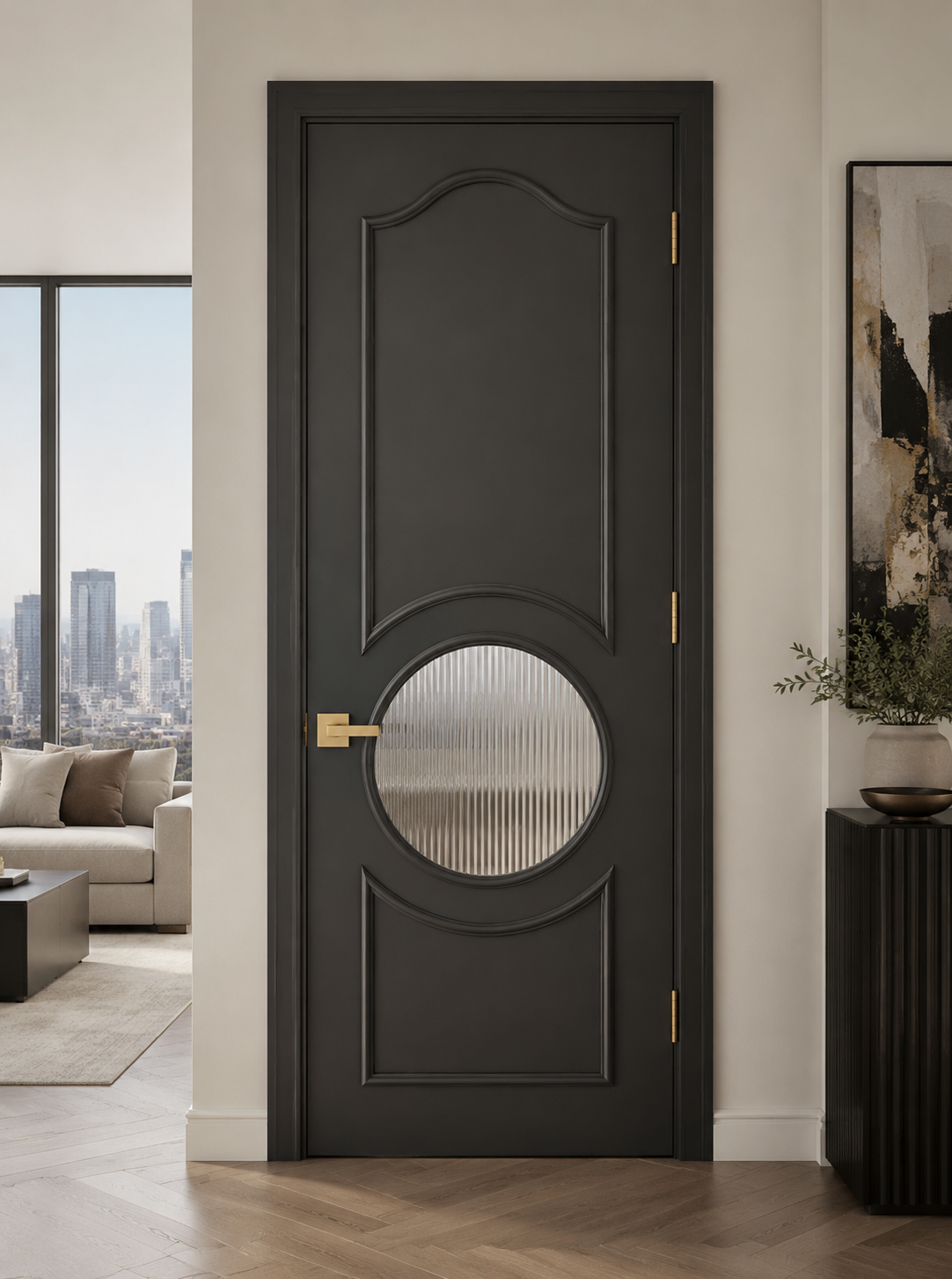
Glass does not have to occupy the entire door to make an impact. In the SC_3180, a circular privacy-glass inset becomes a focal point within a composition of curved moulding.
Fluted or reeded glass allows light to travel between spaces while softening visibility. That makes the design especially effective in a high-rise residence, where borrowed light can brighten an interior hallway, dressing area, office, or primary suite. The glass supports function, but the surrounding geometry makes it feel intentional and distinctive.
3. Use Geometry to Sharpen a Modern Office
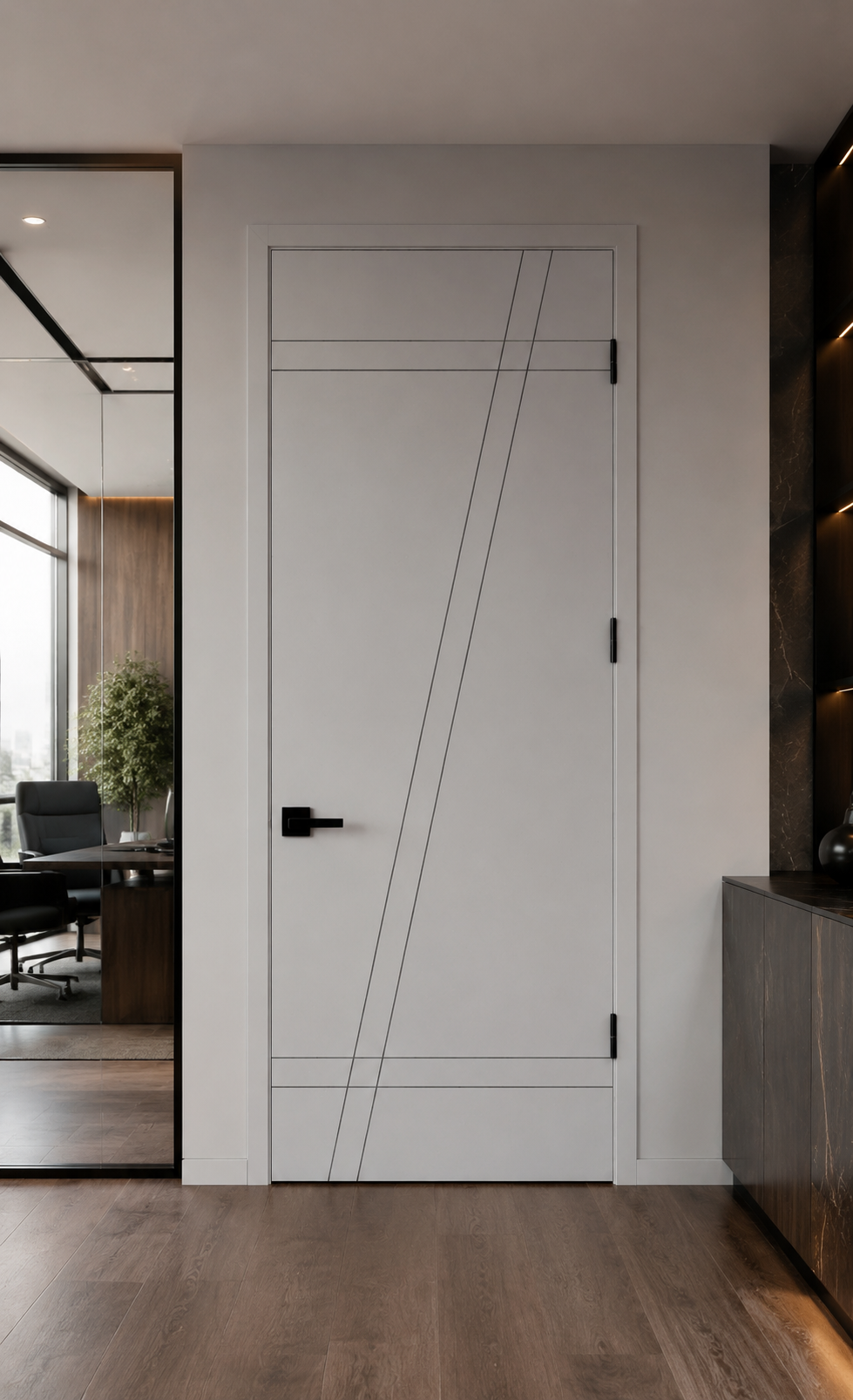
Minimal does not have to mean plain. The 6200 uses precise horizontal and diagonal routing to create a graphic composition with very little visual weight.
In an executive office, those clean lines complement glass partitions, stone surfaces, light woods, and streamlined furniture. The diagonal detail creates energy, while the horizontal lines provide balance. This is a strong option when a project calls for contemporary character without decorative moulding or a traditional panel arrangement.
4. Bring Warmth and Privacy to Healthcare Interiors
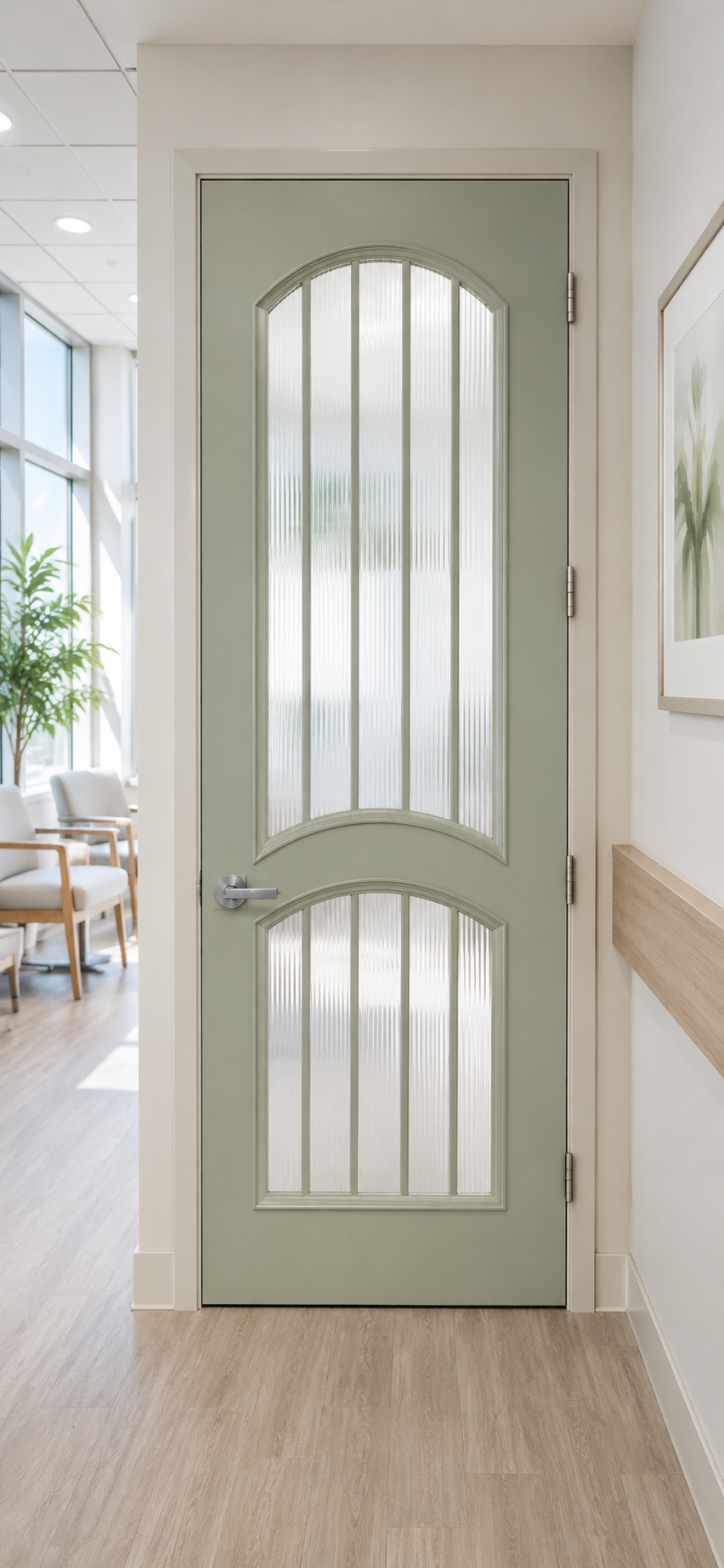
Medical environments need durable, practical openings, but that does not mean every door must feel institutional. The arched panels of the 2030 introduce a softer, more welcoming shape, while narrow reeded-glass inserts can help light pass into consultation and administrative areas without sacrificing privacy.
Color can further change the experience. A soft sage, muted blue, or warm neutral finish can support a calmer atmosphere and make clinical interiors feel more approachable. Used thoughtfully, the door becomes part of a more human-centered environment.
Project requirements—including privacy, accessibility, fire rating, hardware, and glazing—should always be coordinated with the complete opening specification.
5. Give Apartments More Personality
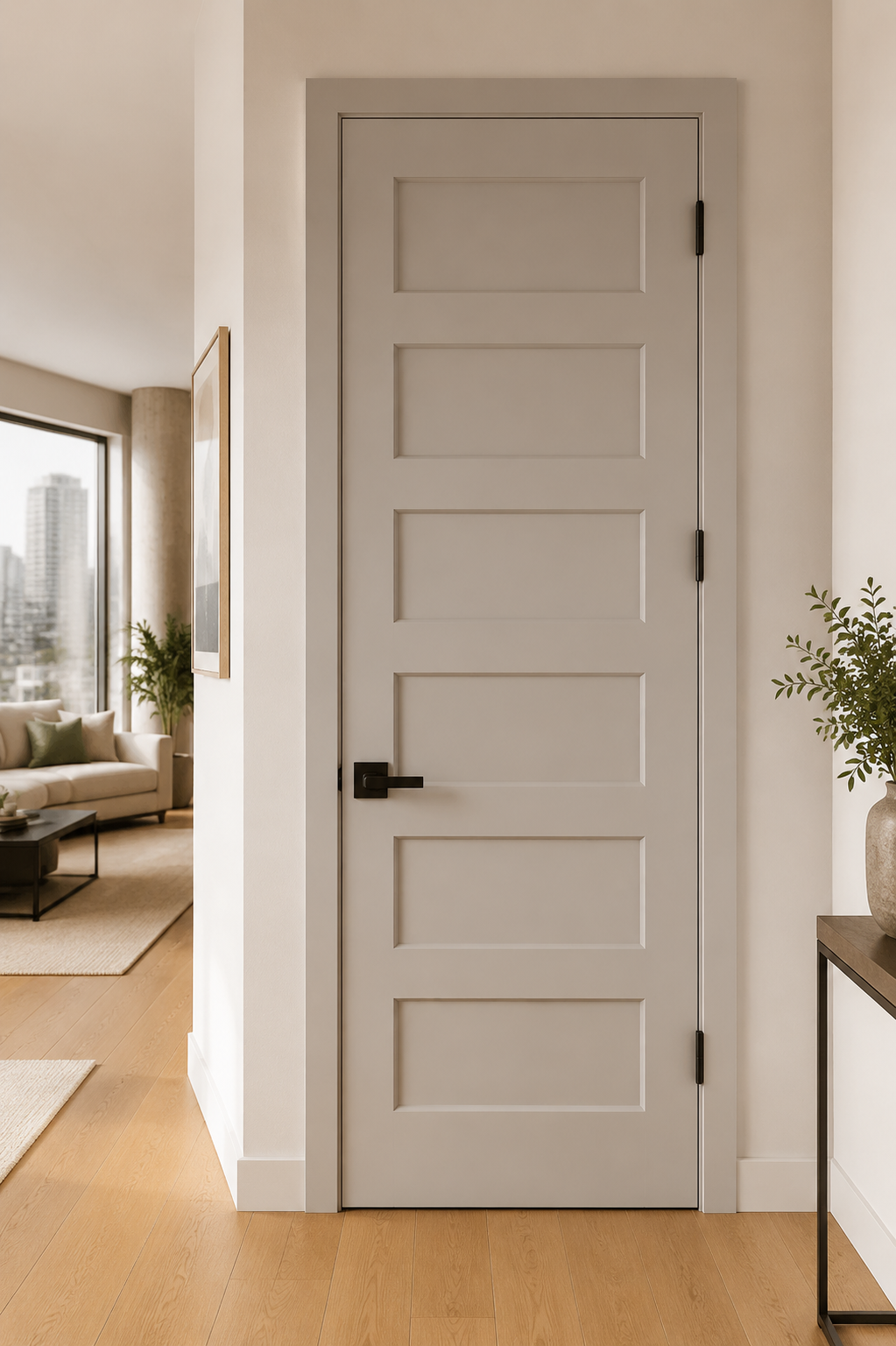
In apartments, every square foot has to work harder—including the doors. The six horizontal panels of the 6100 create rhythm and dimension while remaining versatile enough for bedrooms, closets, home offices, and shared living spaces.
A saturated painted finish can make the door an intentional accent without taking up any additional room. For developers and designers, repeating a distinctive profile throughout a unit can create cohesion and help an apartment feel more customized.
6. Make Commercial Spaces Feel Creative
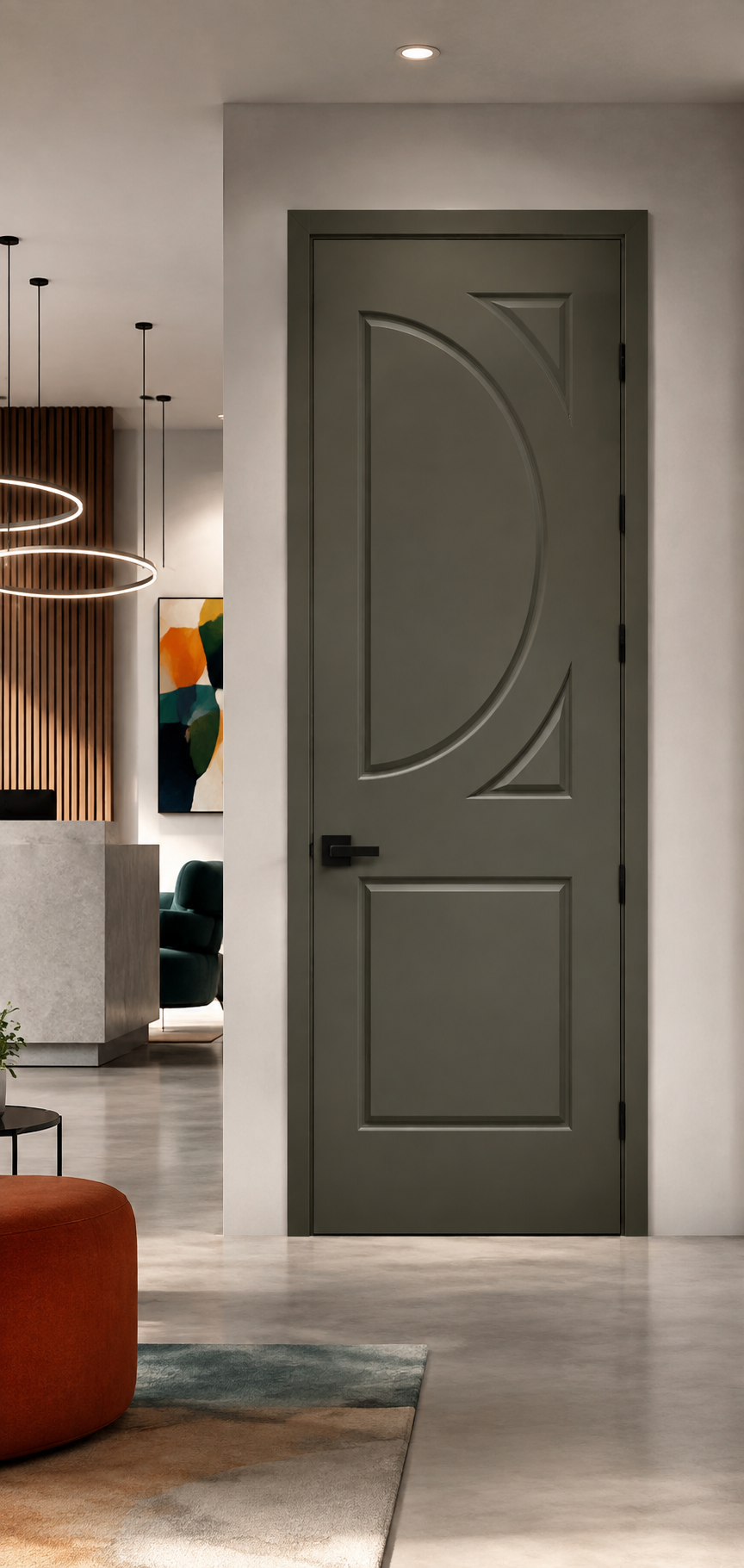
The 4130 turns familiar geometric shapes into an unexpected composition. Its large semicircle, curved corner details, and lower square panel feel graphic, modern, and slightly playful.
That balance makes it well suited to creative agencies, design studios, hospitality offices, and other commercial interiors that want to express personality from the first impression. In a deep blue or another brand-adjacent finish, the door can reinforce the space’s visual identity without adding signage or surface graphics.
7. Reimagine Traditional Detail
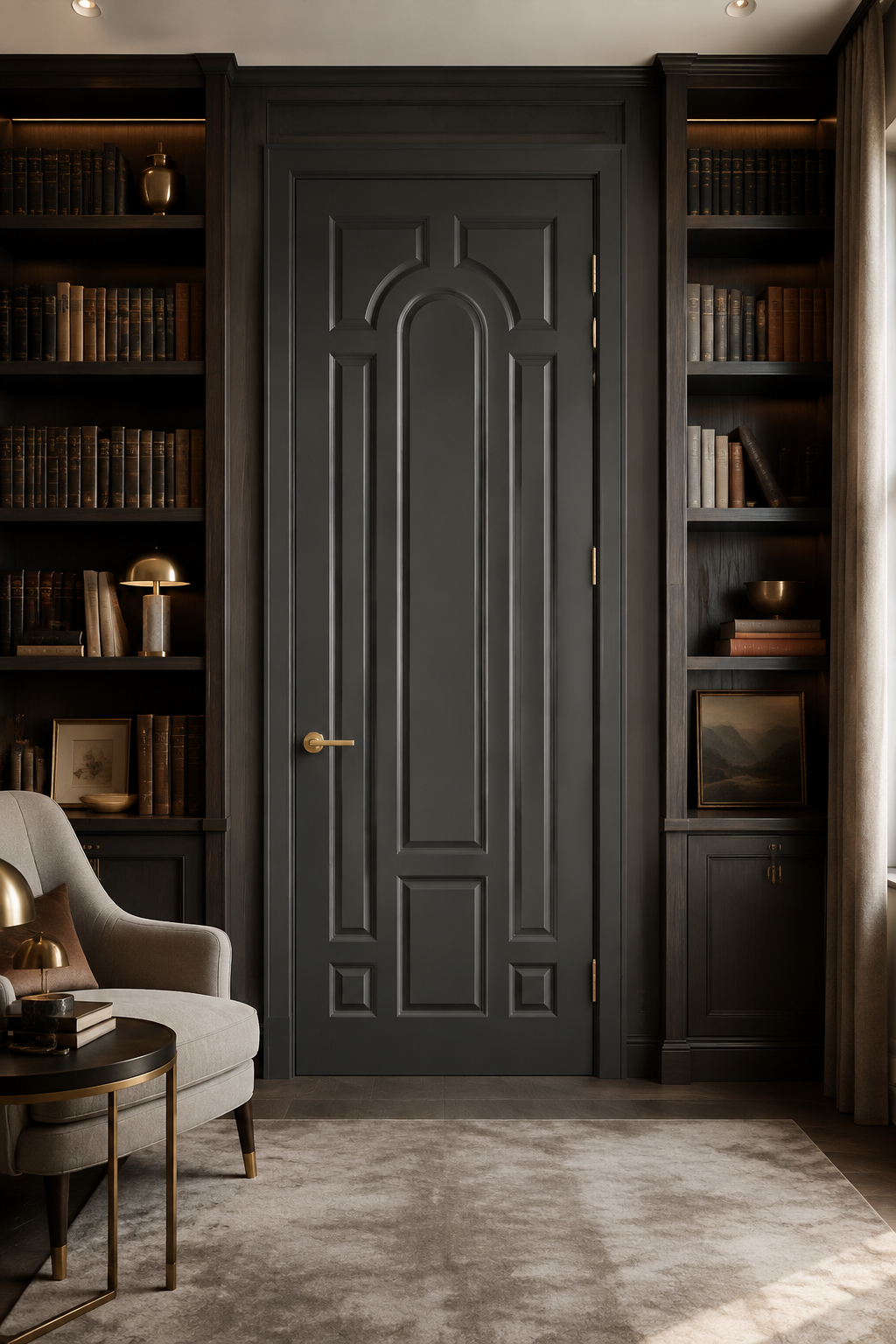
With its elongated central arch and layered surrounding panels, the 8030 offers a more formal interpretation of decorative door design. It feels at home in a library, study, dining room, or other space intended to feel established and special.
The profile can lean traditional in a warm white finish or become moodier and more contemporary in forest green, charcoal, or deep oxblood. Paired with the right hardware and trim, it creates the visual presence of custom millwork across the entire opening.
8. Create a Signature Multifamily Moment
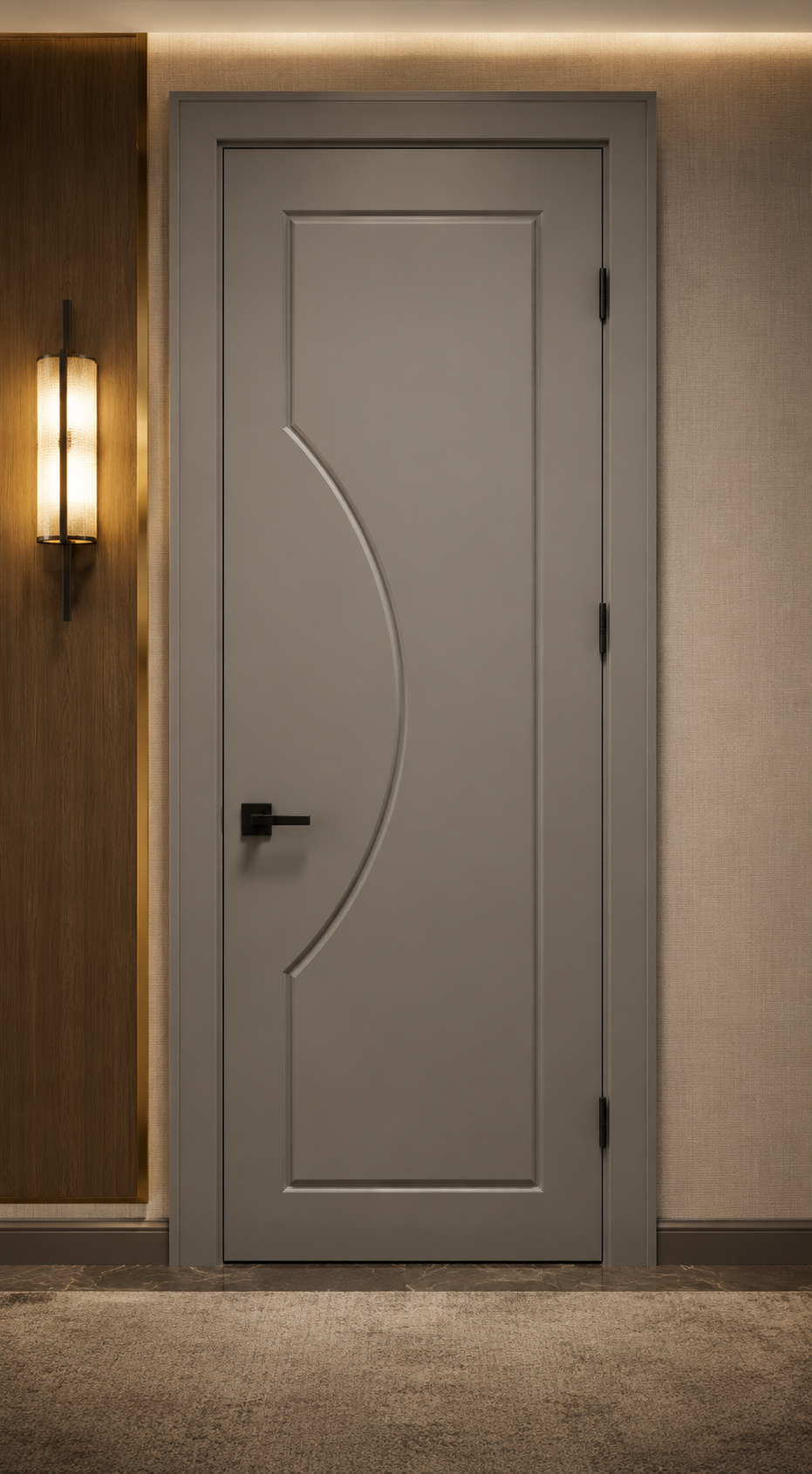
Multifamily corridors need consistency, but consistency does not require anonymity. The 1100 uses one broad inward curve to interrupt a clean rectangular border, creating a recognizable silhouette with a relatively restrained amount of detail.
Used across unit entries or selected amenity spaces, a profile like this can contribute to a property’s identity and elevate the resident experience. Coordinated finishes, frames, hardware, wall lighting, and unit markers can turn a repetitive corridor into a polished architectural sequence.
A Door Should Do More Than Fill an Opening
The best interior doors bring together design and performance. Shape, routing, moulding, color, glazing, hardware, and the surrounding architecture should all feel like parts of one decision.
That applies whether the project is a private residence, hotel, apartment development, workplace, or medical facility. A distinctive door can help establish hierarchy, carry a design concept from room to room, introduce borrowed light, or simply give people something more memorable than another blank surface.
At Timberland Door, we manufacture architectural doors for projects that require both visual flexibility and dependable performance. Our team can help you explore design profiles, applied moulding, routed details, glass options, construction requirements, and the right solution for your opening.
Ready to stop settling for boring doors?
Explore our door designs or Request a quote to start planning your next project.
