
Solid wood has long been associated with quality, but it is not automatically the best material for every architectural door. When a project calls for painted doors, custom designs, visual consistency, or coordinated fire-rated openings, solid-core MDF can offer meaningful advantages over a solid wood door such as birch.
The right choice ultimately depends on the project’s design intent. Birch is well suited to applications where natural grain and stained wood are central to the aesthetic. For painted architectural interiors, however, Timberland’s solid-core MDF doors provide a smooth finish, dependable consistency, and exceptional design flexibility. Let’s dive in on some of the key differences in solid core MDF vs solid wood doors.
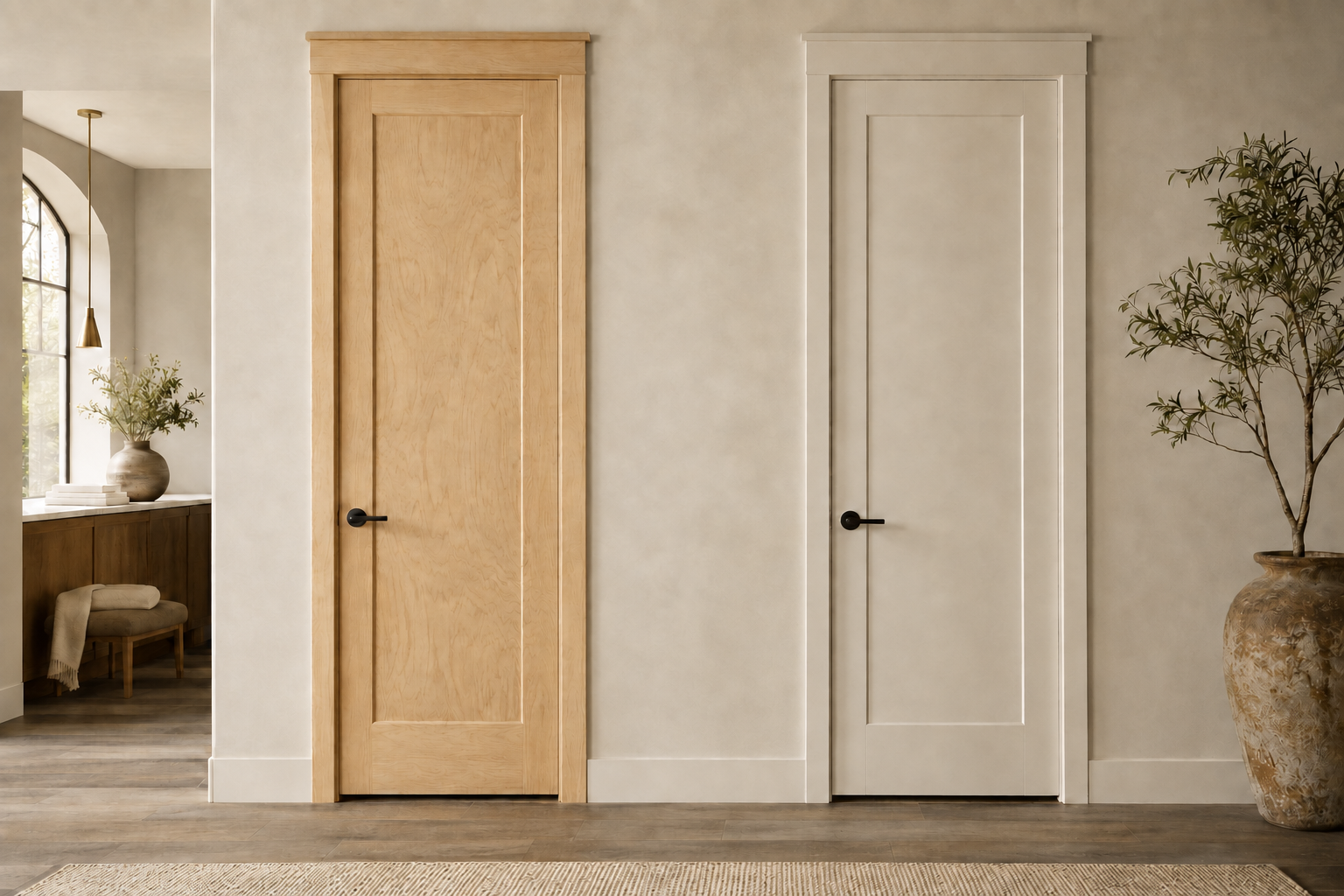
Greater Dimensional Stability
Natural wood responds to changes in temperature and humidity. As environmental conditions fluctuate, solid wood can expand, contract, warp, or reveal movement around its joints.
MDF is engineered for greater dimensional consistency. This makes it an especially practical choice in humid climates and conditioned commercial interiors where maintaining a clean, uniform appearance is important.
Proper specification, installation, finishing, and environmental control remain essential for any door material, but MDF provides a more predictable foundation for painted architectural applications.
A Smoother Painted Finish
Birch offers attractive natural grain, but that grain can remain visible beneath paint. Natural variations in color and texture may also produce subtle differences between doors.
MDF provides a smooth, uniform surface without knots or prominent grain. Paint can be applied consistently across the face of the door, creating a refined finish that works particularly well in modern interiors, hospitality spaces, multifamily developments, offices, healthcare facilities, and high-end residential projects.
When the design calls for paint rather than stain, using premium hardwood beneath the finish may add cost without contributing to the final appearance.
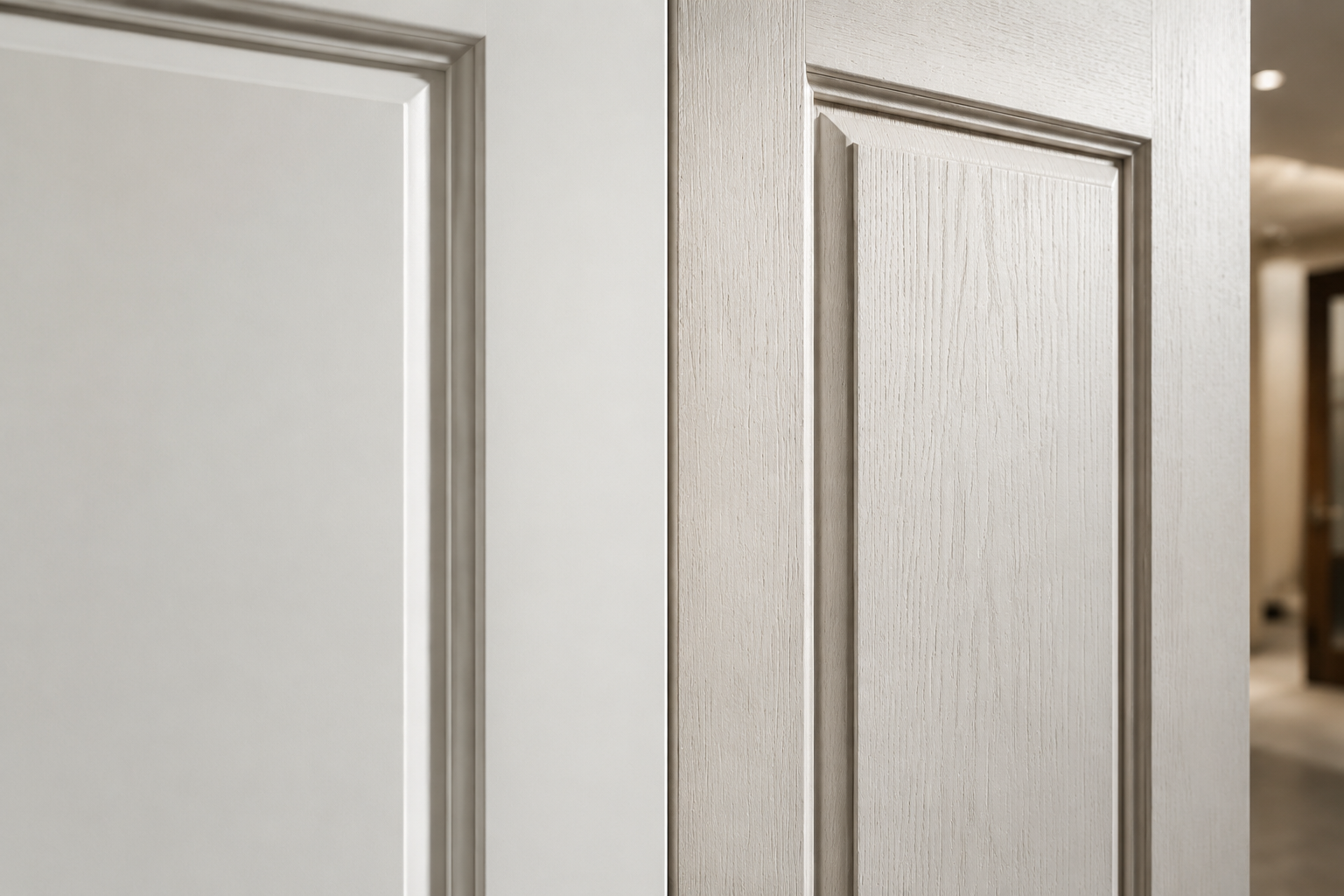
More Freedom to Customize the Design
One of the strongest advantages of Timberland’s solid-core MDF construction is its design flexibility.
The door face can accommodate routed patterns, custom profiles, applied mouldings, glazing details, and other architectural elements. This allows designers to create distinctive door collections that complement the surrounding millwork and interior architecture.
Instead of limiting a project to standard wood-door configurations, Timberland can help translate a design concept into a coordinated door package.
Consistency Across the Entire Project
Natural wood varies from one piece to another. Grain direction, tone, texture, and pattern are part of its appeal, but those differences can make perfect uniformity difficult to achieve.
MDF provides a consistent surface and material composition. Door profiles and proportions can be repeated accurately throughout a project, supporting a cohesive appearance across numerous rooms, floors, or buildings.
This consistency is especially valuable for commercial and multifamily projects with large door schedules.
Coordinated Fire-Rated Options
Fire-rated openings do not have to disrupt the project’s design language.
Timberland offers fire-rated door solutions that can coordinate with the appearance of non-rated doors. This helps architects and designers maintain visual continuity throughout a building while addressing the performance requirements of individual openings.
Fire ratings and available designs depend on the complete tested assembly and project specifications, so every rated opening should be reviewed for compatibility.
A Solid, Substantial Door
Solid-core MDF doors provide the weight and substantial feel customers expect from a quality architectural door. Their dense construction can also support greater privacy and sound control than lightweight hollow-core alternatives, depending on the complete opening assembly.
This makes them a compelling option for bedrooms, hotel rooms, private offices, conference rooms, healthcare environments, and multifamily residences.
When Is Birch the Better Choice?
Birch remains an excellent material when the customer wants:
- Authentic natural wood grain
- A stained or clear-coated finish
- Natural variation and character
- A traditional hardwood appearance
If those qualities are central to the design, solid wood or a wood-veneer architectural door may be the appropriate choice.
When the door will be painted, customized, or repeated throughout a large project, solid-core MDF often provides a more practical combination of appearance, consistency, stability, and value.
Solid-Core MDF vs Solid Wood Doors? Choose the Material That Supports the Design
The question is not whether MDF is always better than birch. It is whether the material supports the project’s design, performance, and budget requirements.
For painted architectural interiors, Timberland’s solid-core MDF doors offer:
- A smooth, consistent painted surface
- Greater dimensional stability
- Extensive design flexibility
- Repeatable results across large projects
- Coordinating standard and fire-rated options
- A substantial solid-core construction
Looking for the right door solution for your next project? Contact Timberland Door to discuss your design, opening requirements, and available customization options.
