
A fire rating is one of the first details you’ll look for on a door schedule. It’s also the starting point for a bigger question. What does the entire opening need, from the door and frame to the hardware and glazing?
We created the free Timberland Door Fire-Rating Guide for architects, builders, dealers, and anyone who reviews door schedules or specifies doors. It gives you a reference to keep handy when reviewing plans, comparing options, or preparing questions for your supplier.
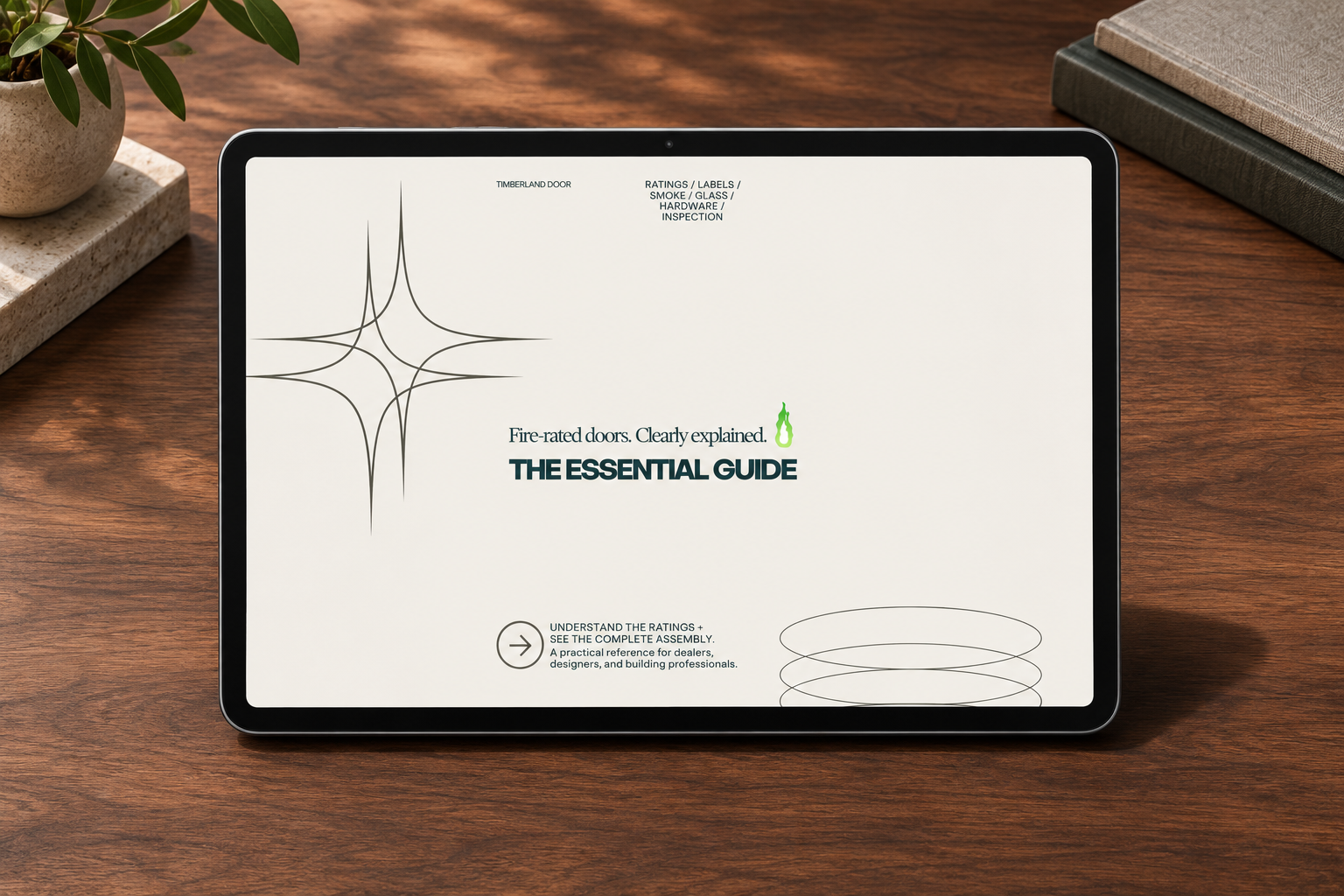
What’s inside the guide
- Fire-rating levels. Get familiar with 20-, 45-, 60-, and 90-minute ratings and the kinds of openings where they may be required.
- Codes, standards, and labels. Learn what to look for on a fire door label and get an introduction to standards such as NFPA 80 and UL 10C.
- Door construction and materials. See how the door, frame, hardware, and glazing fit into the assembly.
- Common specification mistakes. Review assumptions that can cause problems when selecting components or making substitutions.
Start with the opening
When you’re reviewing a door schedule, make a note of the required rating, the frame and hardware, and any glazing shown on the plans. Having those details together makes it easier to ask specific questions and confirm which options fit the project.
